Description
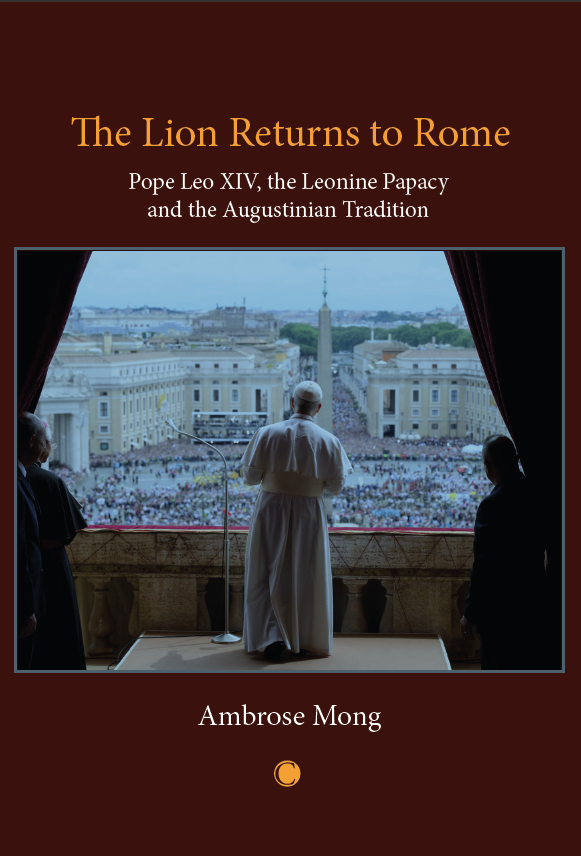
On May 8, 2025, Cardinal Robert Prevost became the first pope from the United States, choosing the papal name Leo XIV. As the fourteenth bearer of a name which translates from Latin to ‘lion’, his choice foregrounds long-standing values of authority, vigilance and spiritual courage in Catholic history. The Lion Returns to Rome: Pope Leo XIV, the Leonine Papacy and the Augustinian Tradition by Ambrose Mong begins by tracing the symbolic legacy of leonine imagery in the Bible, showing what this complex motif reveals about majesty and paradoxes in the Scriptures.
The Lion Returns to Rome then intimately ties Pope Leo XIV to Augustine’s spiritual pilgrimage, from restlessness and searching towards deep peace with God. Mong explores the far-reaching influence of St. Augustine on the papacies of Leo I and Leo XIII and projects how Augustinian thought could shape the emerging priorities of Leo XIV. Through this exploration, the book argues that understanding Augustine’s enduring presence in Catholic theology is key to discerning where the Church is headed under new leadership.
About the Author
Ambrose Mong, Ph.D., serves as an assistant parish priest at Holy Cross Church, Hong Kong. He is also a research associate at The Chinese University of Hong Kong and a part-time lecturer at the Holy Spirit Seminary and Saint Francis University in Hong Kong. His publications with James Clarke & Co. include A Better World is Possible: An Exploration of Eastern and Western Utopian Visions (2018), Sino-Vatican Relations: From Denunciation to Dialogue (2019), and Christianity and Western Literature: A Story of Sin and Salvation (2023).
Contents
Foreword by Fr Peter Jones OSA
Preface and Acknowledgements
Introduction
Chapter 1: Leonine Imagery in Scripture
Chapter 2: Augustine of Hippo
Chapter 3: Leo the Great
Chapter 4: Legacy of Leo XIII
Chapter 5: Leo XIV: An Augustinian Pope
Epilogue
Bibliography
Index
Endorsements and Reviews
‘With accessible style and depth of scholarship, Ambrose Mong deepens our understanding of Pope Leo XIV by weaving a number of diverse threads together into a strong, rich, and beautiful fabric. His “warp” is a complex biblical portrait of the lion and his reflections on the wisdom and spirit of Augustine and the Order named after him. His “weft” are the threads of Leo I’s administrative and theological genius, Leo XIII’s concern for social justice and Leo XIV’s commitment to solidarity with the poor, reflection on the AI revolution, synodality, and mission. It is a fabric made from the past for the sake of the future, and a work of love for the Christian tradition and for the church. Like all his predecessors, Leo XIV, the Lion who has returned to Rome, is a witness to the God in whom all peoples can find not only rest, but challenge to live lives of justice as well.’ Stephen Bevans, SVD, Louis J. Luzbetak, SVD Professor of Mission and Culture, Emeritus, Catholic Theological Union, Chicago
‘With his trademark clarity and insightfulness, Mong performed a real tour de force in his new book on Pope Leo XIV. Playing on the meaning of the Latin leo (lion), Mong unpacks its symbolism of steadfastness, leadership, and guardianship of the Christian tradition, from Augustine to all the popes who bore the name Leo, especially Leo the Great and Leo XIII, before Cardinal Robert Prevost chose this name for his pontificate. Leo XIV is indeed “the Lion Returns to Rome,” not only with a roar, as was demonstrated in his condemnation of the misuse of the Christian faith to support an unjust war, but also with the gentleness of the lamb faithfully following the Shepherd wherever he leads. I most strongly recommend Mong’s book to readers seeking to understand the theology that guides Pope Leo XIV’s ministry.’ Peter Phan, Ellacuria Chair of Catholic Social Thought at Georgetown University, USA
‘Leo XIV begins his time as pope in a tradition forcefully described in this book that has its leonine roots in the imagery of Scripture, traced through the theological, ecclesiological and social vision of St Augustine of Hippo and two other popes – Leo the Great and Leo XIII. All were leaders in times of radical change, and this too the new ‘lion’ in Rome shares with them. This is a book of theological challenge and energetic hope for the future, grounded in the past.’ The Revd Canon Professor David Jasper DD FRSA FRSE, Emeritus Professor, University of Glasgow